
Can you describe your sales system?
There is a pressing need for businesses to systematise their sales approach, but what does this mean and what is the benefit?
First let’s define what a sales system is: the processes, applications, and tools your sales organisation uses to manage all aspects of the sales process; from lead identification through to relationship and account management.
Your sales system is everything from your CRM, approach to sales competencies, your organisational culture, your compensation plan to the way your organisation is structured. Every sales organisation has a sales system. The question is, how optimised is it? AND could it be yielding a better return on investment?
Research by Korn Ferry published annually across close to 1,000 sales organisations shows how the more systematised sales process becomes, the better the results across two scales.
1. The key operational sales metrics across the sales organisation
2. An improved relationship with the customer that shifts you towards Trusted Partner
The Sales Relationship Process (SRP) Matrix
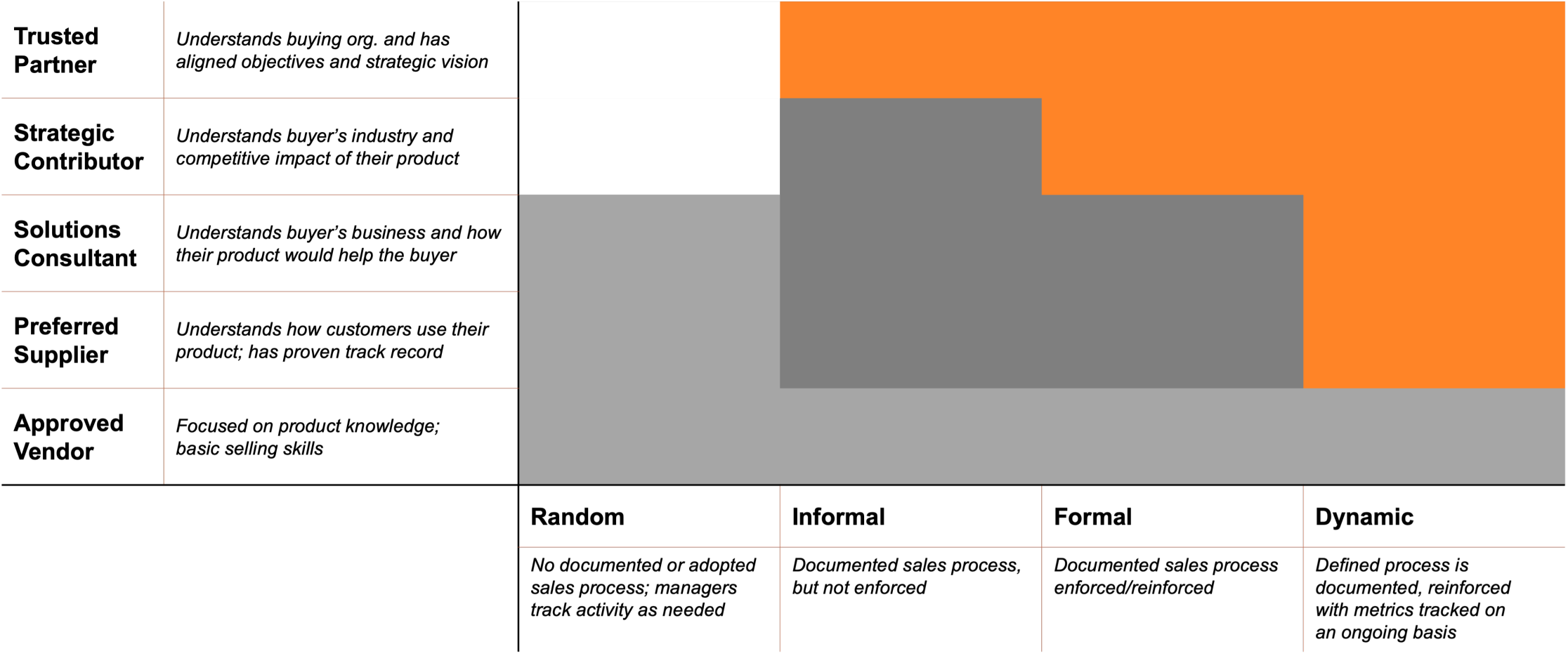
The SRP Matrix, which plots organisations based on their depth of relationship and process maturity, demonstrates obvious and clear improvements in sales organisation performance across a range of operational sales metrics.
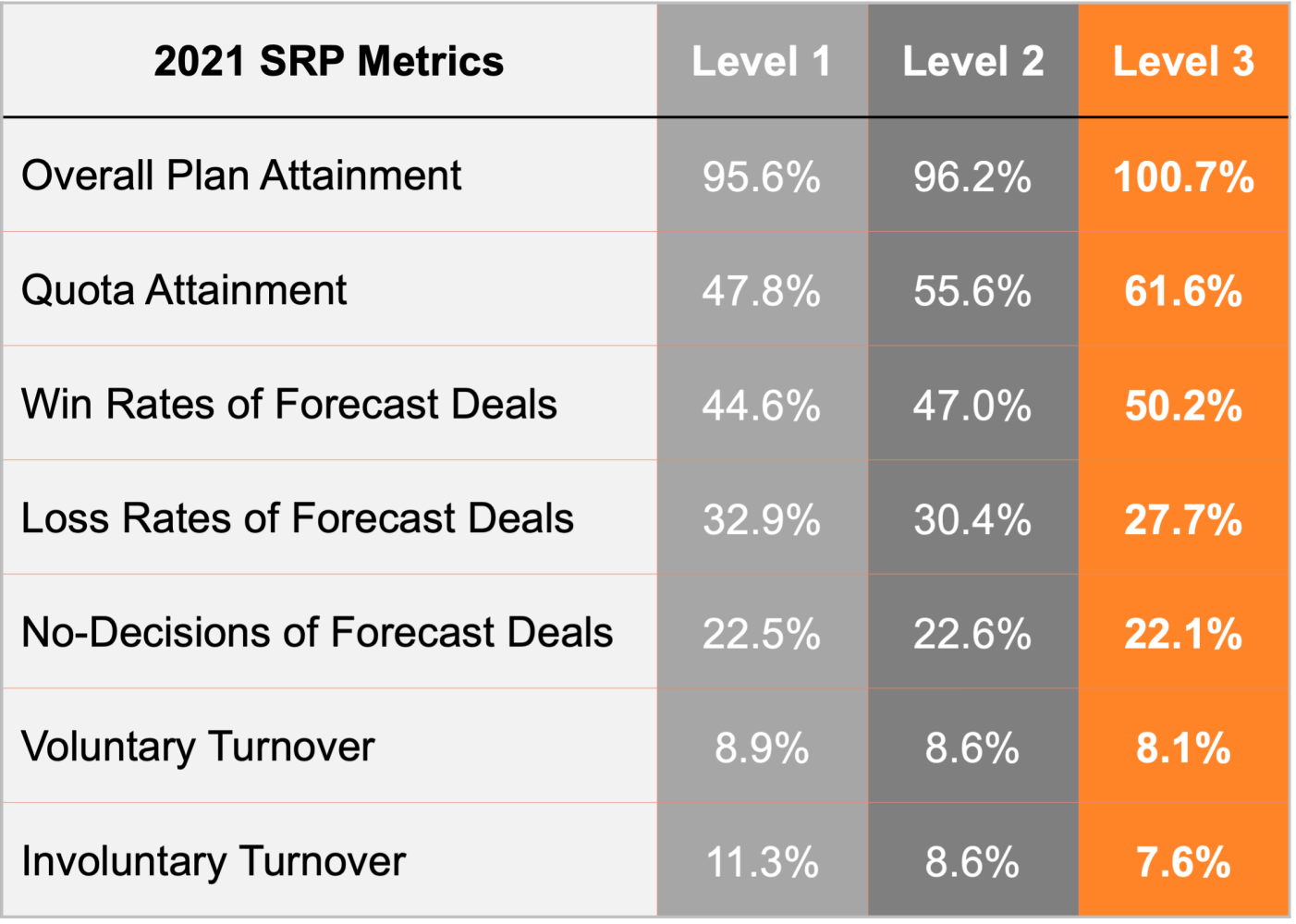
But what about the unseen advantages that don't show up as explicitly?
When more people achieve quota, employee turnover reduces. This translates into lower recruiting costs, mitigating the risk of revenue loss because of new seller ramp-up time and competitor encroachment into vacant territories.
There’s more. When the customer’s perception of sellers in your business moves towards the much-vaunted Trusted Partner status, the relationship strengthens, increasing the likelihood of being called into the buying process earlier.
One of the big challenges for sellers today is the formalisation of the buying process and the limitations that places on their ability to engage earlier and connect with key decision-makers. Imagine a scenario where your sellers are seen as ‘problem solvers’ over ‘product reps’ by buyers and are asked to participate earlier in the buying process more of the time. How would that impact deal qualification and win rates?
We have seen dramatic effects on win rates when sales organisations of all sizes adopt a more systematised approach to their sales organisation.
Every percentage point gained in optimisation strengthens your organisation, reduces risk of poor performance, and has a cumulative impact. Year-on-year behaviours are honed, processes are refined, practices are improved and your sales system produces more predictable results. But wait - there’s still more! As we see ‘sales’ become more systematised, the cumulative effect evolves seller competency.
The Four Stages of Competency Framework
You may be familiar with the Four Stages of Competency framework, which we have tweaked a little. Sellers can, and do operate in all four boxes from time-time and are not just consigned to one. The desired state is for sellers to be Consciously Competent, which is one of the many outcomes when you systematise your sales approach.
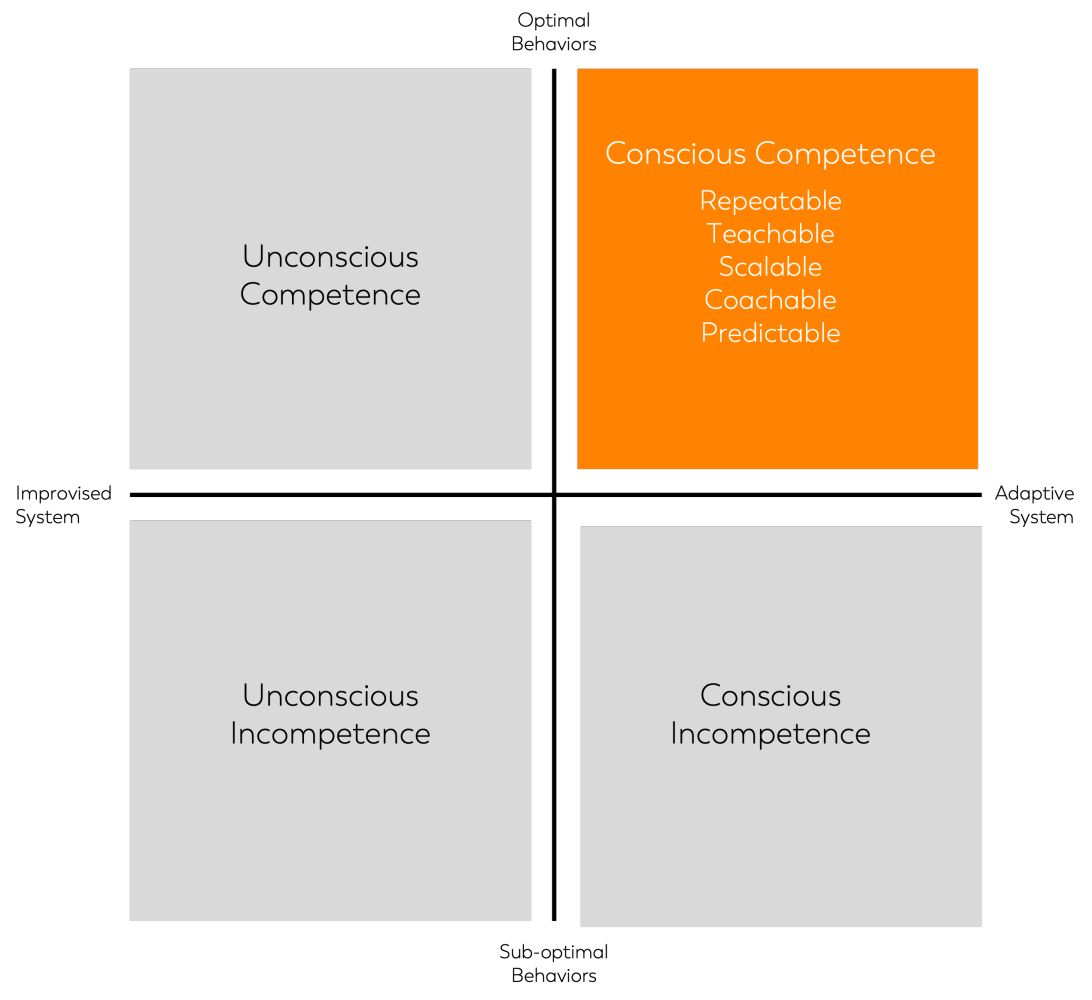
Unconscious Incompetence – I don't know the real reason why we won/lost, and I don't know how to scale/correct it next time.
Conscious Incompetence – I know I really should prepare/update my strategy for that meeting/opportunity or account, but I decide not to.
Unconscious Competence – We won because of our genius pitch; you won because your offering was differentiated in the eyes of the buyer.
Conscious Competence – We know why we won/lost and can either scale it or take corrective action in the future if required.
Standardising your sales process, tools, and developing a common language fosters seller objectivity. This ultimately becomes teachable, repeatable and scalable across an organisation of any size. This is how sales organisations become more predictable, intentionally increase performance, and yield a better return on investment.
The first point to understand is this; you have a sales system, whether your sales system is highly improvised or highly adaptive. We assert the Sales Leaders job is the continuous development of that sale system.
In our latest eBook, the Keys to The Kingdom - A leaders guide to transforming sales performance, we discuss the 'what' and 'how' to systematise sales.
The Serve Blueprint ® for transforming sales performance
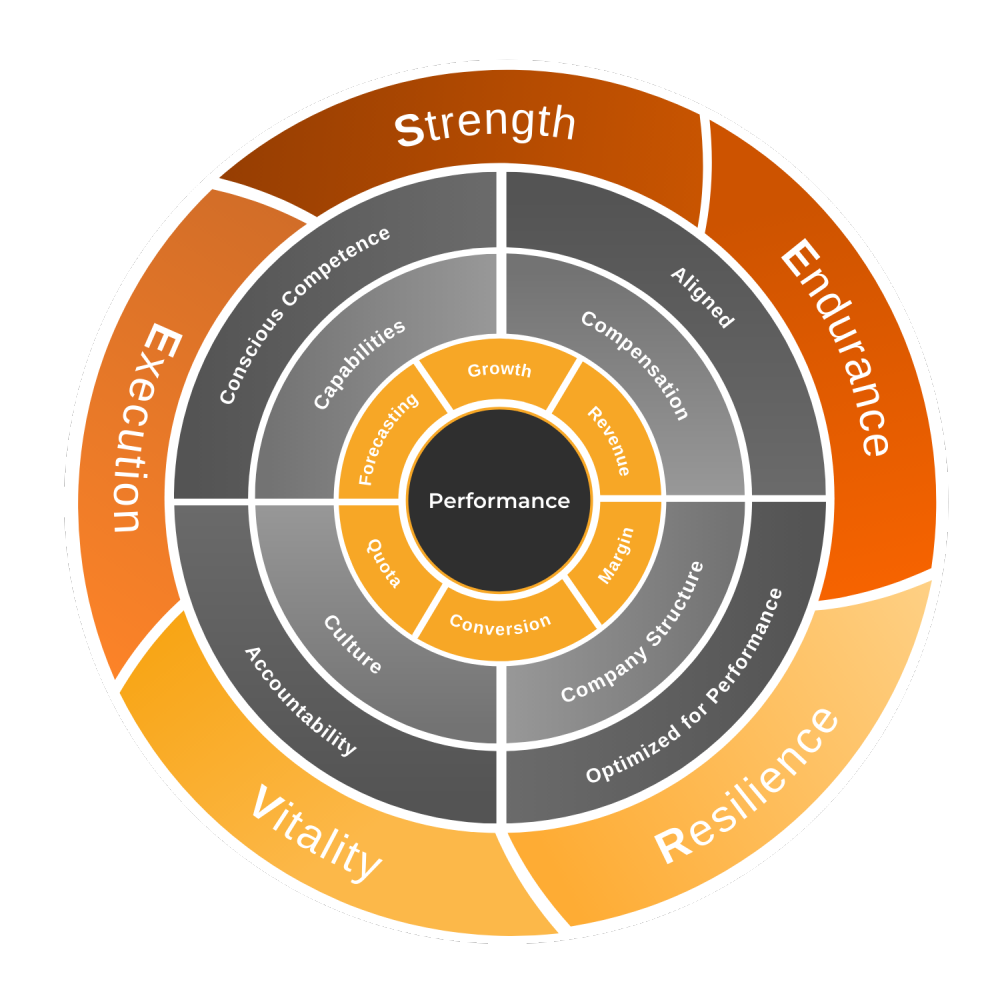
Using the SERVE Blueprint ®, the focus is on performance and asks how do we leverage the levers all Sales Leaders can influence, which we call the ‘four Cs’:
· Capabilities
· Culture
· Compensation
· Company structure
This is not a call for an unqualified shake-up within your sales organisation, although that may be appropriate. This is a question that asks, are these four levers serving you to optimise your sales performance? It’s our job as Sales Leaders to monitor, develop and optimise these four levers – continuously.
Download the eBook to get deeper into each of the four 'Cs' because when you get to work on these four levers, that’s when you can transform sales performance and the keys to the kingdom will surely be yours.
This is what we do at Transform2perform, we help you develop and optimise the four-levers to transform sales and business performance. Connect or call us for a brainstorm on how you can optimise your sales system.
With every newsletter we aim to bring you exciting guidance, hints and tips on how to develop your sales organisation for peak performance. Watch out for the next instalment.
Be well and stay safe!!